Wednesday, April 1, 2020

The Top 10 Communication Skills

The Importance of Communication Skills in the Workplace

Communication skills are essential no matter what job you work in or your level of seniority. When there is a breakdown in communications, often efficiency, morale and objectives can all suffer.
In today’s competitive jobs market, communication skills in the business world are highly sought after, with recruiters looking for candidates who can communicate information, negotiate and confidently deal with customers.
Listening carefully, speaking clearly and putting others at ease are very valuable attributes to possess.

The Top 10 Communication Skills

1. Emotional Intelligence

Emotional intelligence is the ability to understand and manage your emotions so as to communicate effectively, avoid stress, overcome challenges and empathise with others. It’s a skill which is learned over time rather than obtained.
There are four main strands to emotional intelligence: self-awareness, self-management, social awareness and relationship management.
Each of these strands is important in its own way and allows you to communicate confidently with a variety of people.

2. Cohesion and Clarity

Good communication is much more than saying the right thing; it is about communicating messages clearly and concisely.
Before you start a conversation, type an email or begin a discussion, have in mind what the purpose of the communication is and what information you hope to obtain as a result.
Lack of clarity and cohesion can result in poor decisions and confusion.

3. Friendliness

In any type of communication, make sure that you set the right tone. A friendly tone will encourage others to communicate with you.
Always try to personalise messages, particularly when working with partners or fellow colleagues.
Wishing the recipient a good weekend, for example, is a great way to personalise your message.

4. Confidence

In all interactions, confidence (but not over-confidence) is crucial. Demonstrating confidence will give customers faith in your abilities to deliver what they need, and that you will follow through with what you have promised.
Conveying confidence can be something as simple as maintaining eye contact during a conversation, or using a firm but friendly tone when speaking with people over the phone.
Be careful not to come across as aggressive, since this will have the opposite effect of what you are hoping to achieve.
5. Empathy
Within a busy work environment, everyone will have their own ideas about how things should be done. Even if you have disagreements with your colleagues or partners, their point of view should be considered and respected.
Empathy is also beneficial when speaking with customers in certain types of customer-facing role.
The goal here is to understand where the other person is coming from – and respect their views even if they are very different from your own.

6. Respect

Empathy leads into the next communication skill, respect.
If you respect the ideas and opinions of others, they will be more likely to communicate with you. Active listening or simply using the name of the person you are speaking to can both be effective.
Make sure that when you type emails, you don’t sound insincere or write in a way that is insincere.
7. Listening
Good communication is all about listening effectively. Take the time to listen to what the other person is saying and practice active listening.
Pay attention to what the other person is saying, ask questions and clarify points, and rephrase what they have said so that you know you have understood correctly.

8. Open-Mindedness

Try to enter into communications without having an agenda.
Strong communications require an open mind and a commitment to understanding other people’s points of view. If you disagree with the people you are speaking to, try to reach a middle ground that benefits all parties.
Approaching a discussion with an open mind is more likely to result in a successful outcome.

9. Tone of Voice

The tone of your voice can set the whole mood of the conversation. If you start the discussion in an aggressive or unhelpful manner, the recipient will be more inclined to respond in a similar way.
The tone of your voice will include the level of emotion that you use, the volume you use and the level of communication you choose.
The same sentence can have a very different meaning depending on which words are emphasised and the tone of your voice.
In a customer complaint scenario, for example, your tone of voice should be as calm as possible, since an unfriendly tone of voice will only serve to worsen the situation.

10. Asking Good Questions

Good questions can help conversations flow and improve the outcome.
During a conversation, always aim to ask open-ended questions. These are questions with prompts which encourage the recipient to speak about certain points and they require more detailed responses.
If you need further information still, you can use probing questions which request even more information from the recipient such as ‘Tell me the process of…”
During the conversation include a mixture of questions including clarification, ‘what if’ scenarios and open-ended questions to make sure that you achieve what you set out to do at the beginning of the call or conversation.
It is likely that you will need to show evidence of your own communication skills during a competency-based interview. Questions you may be asked include:
  • Give an example of how you dealt with a difficult or sensitive situation that required extensive communication.
  • Give me an example of how you dealt with a difficult customer at work.
  • Tell me about a time when you had to explain an issue or process to a colleague (or colleagues) at work.
  • Tell me about a time when you taught someone else something.
  • How do you explain things to other people?
Employers are always looking for opportunities to evaluate the way in which you have used your communication skills in previous roles or in your academic studies.
During interview, discuss your communication skills in terms of a project you completed at work or university, and how you used these skills to work with others and deliver the project on time.
Try to make your answers as benefits-focused as possible.
To achieve this, you would give an example of how you communicated effectively and then go on to say what benefit this had, such as turning a negative customer experience into a positive one, for example.
There are lots of examples to draw on but make sure that these are prominently displayed in your CV and you explain them effectively during your interview.


100 most influential people in the world


This is a list chosen by Michael H. Hart, from the book ‘100 most influential people in the world’. He chose people on a ranking of who had done the most to influence the world. I recommend reading the book as it offers an interesting insight into the influence of different individuals. As the author notes, ‘Influential’ does not include a judgement on whether they influenced the world for the better or worse.

Top 100 List

  1. Muhammad (570 – 632 AD) Prophet of Islam.
  2. Isaac Newton (1642 – 1727) – British mathematician and scientist.
  3. Jesus of Nazareth (c.5BC – 30 AD) Spiritual teacher and central figure of Christianity.
  4. Buddha (c 563 – 483 BC) Spiritual Teacher and founder of Buddhism.
  5. Confucius (551 – 479 BC) – Chinese philosopher.
  6. St. Paul (5 – AD 67) – Christian missionary and one of the main writers of the New Testament.
  7. Ts’ai Lun (AD 50 – 121) Inventor of paper.
  8. Johann Gutenberg (1395 – 1468) – Inventor of the printing press.
  9. Christopher Columbus (1451 – 1506) – Italian explorer landed in America.
  10. Albert Einstein (1879 – 1955) German/ US scientist discovered Theory of Relativity.
  11. Louis Pasteur (1822 – 1895) French biologist. Developed a cure for rabies and other infectious diseases.
  12. Galileo Galilei (1564 – 1642) Italian scientist – confirmed the heliocentric view of the universe.
  13. Aristotle (384 BC – 322 BC) – Greek philosopher and polymath
  14. Euclid (c. 325 – 265 BC) – Greek mathematician
  15. Moses (c 1391 – 1271 BC) A key figure of Jewish / Christian history gave 10 Commandments of Old Testament
  16. Charles Darwin (1809 -– 1882) –Scientist who proposed and popularised theory of evolution.
  17. Shih Huang Ti (259 – 210 BC) – King of the state of Qin who conquered and united different regions of China in 221 BC.
  18. Augustus Caesar (63 BC-AD 14) – First Emperor of Rome
  19. Nicolaus Copernicus (1473-1543) Renaissance mathematician and astronomer who believed Sun was the centre of the Universe – rather than earth.
  20. Antoine Laurent Lavoisier (1743 – 1794) French chemist and biologist who had a leading impact on the chemical revolution.
  21. Constantine the Great (272 AD – 337) Roman Emperor who accepted Christian religion.
  22. James Watt (1736 – 1819) Scottish engineer. Watt improved the Newcome steam engine creating an efficient steam engine
  23. Michael Faraday (1791 – 1867) – English scientist who contributed in fields of electromagnetism and electrochemistry.
  24. James Clerk Maxwell (1831-1879) Scottish physicist. Maxwell made a significant contribution to understanding electromagnetism
  25. Martin Luther (1483-1546) Sought to reform the Roman Catholic Church – starting the Protestant Reformation.
  26. George Washington (1732 – 1799) – Leader of US forces during American Revolution and 1st President of US.
  27. Karl Marx (1818 -– 1883) – German Communist philosopher.
  28. Orville and Wilbur Wright Orville (1871 – 1948) – Wilbur (1867 – 1912) – Created and flew the first aeroplane.
  29. Genghis Kahn (1162 – 1227) – Military and political leader of the Mongols.
  30. Adam Smith (1723-1790) Scottish social philosopher and pioneer of classical economics.
  31. William Shakespeare (1564- 1616) English poet and playwright.
  32. John Dalton (1766 – 1844) English chemist and physicist. Made contributions to atomic theory.
  33. Alexander the Great (356 -– 323 BC) – King of Macedonia and military leader.
  34. Napoleon Bonaparte (1769 –- 1821) – French military and political leader.
  35. Thomas Edison (1847 – 1931) – Inventor and businessman helped introduce electricity and electric light bulbs.
  36. Antony van Leeuwenhoek (1632-1723) Dutch chemist – founder of microbiology.
  37. William T.G. Morton (1819 – 1868) American dentist who pioneered the use of anaesthetic.
  38. Guglielmo Marconi (1874 – 1937) Italian engineer who helped develop radio transmission.
  39. Adolf Hitler (1889 – 1945) – Dictator of Nazi Germany.
  40. Plato (424 –- 348 BC) – Greek philosopher.
  41. Oliver Cromwell (1599-1658) – Leader of Parliamentarians in English civil war.
  42. Alexander Graham Bell (1847 – 1922) – Scottish inventor of the telephone.
  43. Alexander Fleming (1881-1955) Scottish biologist who discovered penicillin.
  44. John Locke (1632-1704) English political philosopher. Locke promoted a theory of liberal democracy and a social contract.
  45. Ludwig van Beethoven (1770 – 1827) German composer of the classical and romantic period.
  46. Werner Heisenberg (1901–1976) German theoretical physicist – one of the pioneers of Quantum mechanics
  47. Louis Daguerre (1787–1851) French artist and photographer, who is credited with the invention of the camera.
  48. Simon Bolivar (1783 – 1830) – Liberator of Latin American countries
  49. Rene Descartes (1596 – 1650) French philosopher and mathematician. “I think, therefore I am.”
  50. Michelangelo (1475 – 1564) Renaissance sculptor, painter and architect
  51. Pope Urban II (1042 – 29 July 1099) Influential Pope who ordered the first Crusade to the Holy Land and set up the Papal Court
  52. Umar ibn al-Khattab (584 CE –  644 CE) Powerful Muslim Caliphate and senior companion of Muhammad. An influential figure in Sunni Islam.
  53. Asoka (c. 260 – 232 BC) Powerful Indian King who established large empire by conquest before converting to Buddhism and pursuing a peaceful approach
  54. St. Augustine (354 – 430) Influential Christian saint and writer, who shaped much of Western Christian thought.
  55. William Harvey (1578 – 3 June 1657) English physician who made contributions to understanding how blood circulated in the body.
  56. Ernest Rutherford (1871 –  1937) NZ born British physicist who made discoveries in atomic physics. His work on splitting the atom was influential for the development of atomic science.
  57. John Calvin (1509 – 27 May 1564) Christian theologian who developed a strict brand of Protestant Christianity which stressed the doctrine of predestination.
  58. Gregor Mendel (1822 –  1884) Czech/Austrian scientist and friar – who founded modern science of genetics.
  59. Max Planck (1858 – 1947) German theoretical physicist who developed a theory of Quantum physics and discovered energy quanta.
  60. Joseph Lister (1827 – 1912) British surgeon who pioneered the use of sterilisation and antiseptic surgery.
  61. Nikolaus August Otto (1832 – 1891) German engineer who developed compressed charge internal combustion engine to run on petrol
  62. Francisco Pizarro (1471 – 1541) Spanish Conquistador who claimed Inca lands for Spain.
  63. Hernando Cortes (1485 – 1547) Spanish Conquistador who conquered the Aztec lands of modern-day Mexico.
  64. Thomas Jefferson (1743 – 1826) 3rd President of US. Principle author of the US Declaration of Independence.
  65. Queen Isabella I (1451 – 1504) Queen of Castille, who helped create a powerful and unified state of Spain whose influence spread to the Americas.
  66. Joseph Stalin (1878 – 1953) Absolute ruler of the Soviet Union from 1924 to his death. Led the Soviet Union in WWII.
  67. Julius Caesar (100 BC – 44 BC) Roman ruler who oversaw the demise of the Roman Republic to be replaced with a Roman Emperor. Militarily strengthened the power of Rome.
  68. William the Conqueror (1028 – 1087) First Norman King of England
  69. Sigmund Freud (1856 – 1939) An Austrian neurologist who founded psychoanalysis, which involved the investigation of the subconscious, dreams and human mind.
  70. Edward Jenner (1749 – 1823) Developed the world’s first vaccine (the smallpox vaccine). Known as the father of immunology.
  71. Wilhelm Conrad Roentgen  (1845 – 1923) German physicist who discovered electromagnetic waves or X-rays.
  72. Johann Sebastian Bach (1685 – 1750) Composer and organist who created some of the world’s most beautiful music.
  73. Lao Tzu (6th Century BC – ) Author of Tao Te Ching and founder of Taoism
  74. Voltaire (1694 –  1778). A key figure of European Enlightenment. His satirical writings played a role in the French Revolution.
  75. Johannes Kepler (1571 – 1630) German mathematician and astronomer who created laws of planetary motion.
  76. Enrico Fermi (1901 – 1954) Italian-American physicist who created the first nuclear reactor
  77. Leonhard Euler (1707 – 1783) Swiss mathematician who made prolific discoveries in calculus and graph theory.
  78. Jean-Jacques Rousseau (1712-1778) – French philosopher, author of Social Contract
  79. Nicoli Machiavelli (1469 –  1527) Italian diplomat and Renaissance writer considered the father of political science.
  80. Thomas Malthus (1766 – 1834) English scholar who raised concern over growing population.
  81. John F. Kennedy (1917 – 1963) 38th President of the US. Served at the height of the Cold War and helped defuse Cuban Missile Crisis.
  82. Gregory Pincus (1903 – 1967) American biologist who created the oral contraceptive pill.
  83. Mani (216 – ) Iranian founder of Manichaeism, a gnostic religion which for a time was a rival to Christianity.
  84. Lenin (1870 – 1924) Leader of the Russian Revolution and new Communist regime from 1917 to 1924.
  85. Sui Wen Ti (541 –  604) Founder of China’s Sui Dynasty and reunifying China in 589
  86. Vasco da Gama (1460s –1524) Portuguese explorer, first European to reach India and establish a route for imperialism.
  87. Cyrus the Great  (600 – 530 BC) Founder of the Achaemenid Empire, the first Persian Empire. Relatively enlightened ruler.
  88. Peter the Great (1721 – 1725) Russian Emperor who expanded the Tsarist Empire to make Russia European power.
  89. Mao Zedong (1893 – 1976) Leader of the Communist Revolution and dictator of China from 1949-1974.
  90. Francis Bacon (1561 –  1626) Creator of the scientific method and key figure in Scientific Revolution of the Enlightenment.
  91. Henry Ford (1863 – 1947) Owner of Ford Motor Company. Revolutionised mass-production techniques
  92. Mencius (385–303BC) Chinese philosopher one of the principal interpreters of Confucianism.
  93. Zoroaster (c. 1200 BC)  Iranian prophet who founded the religion of Zoroastrianism.
  94. Queen Elizabeth I (1533 – 1603) Queen of England from 1558 to her death in 1603. Cemented England as a Protestant country, defeated Spanish Armada.
  95. Mikhail Gorbachev (1931 – ) Leader of Soviet Communist Party who pursued reform – perestroika and glasnost to open Eastern Europe to democracy.
  96. Menes c. 3000 BC Egyptian pharaoh who united Upper and Lower Egypt to found the First Dynasty.
  97. Charlemagne (742 – 814) United Europe to form the Carolingian Empire. First western Emperor since the fall of Rome.
  98. Homer Greek poet who wrote Iliad and Odyssey
  99. Justinian I  (482 –   565) Emperor of Eastern Roman Empire
  100. Mahavira (6th century BC)  Principal figure of Jainism.


How to Make Money with Your Blog in 2020


earn_money_bloggingYou want to make money, right? Of course you do. Everyone wants – and needs -to make money. So you started a blog since you’ve heard it’s an easy way to make cash, but you’re not quite sure how to actually make money doing it. Or maybe you already have a blog and you’re exploring ways to monetize it.
No matter which group you’re in, making money with a blog – whether it’s a hobby blog or a business blog –is possible. It’s not a get rich quick ordeal, but if you do it right, you could make enough to support your family and more. Let’s dive in and see how you can make a profit with your blog.

Monetize with CPC or CPM Ads

One of the most common ways bloggers make money is through placing ads on their site. There are two popular types of ads:
  • CPC/PPC Ads: Cost per click (also called pay per click) ads are usually banners that you place in your content or sidebar. Each time a reader clicks on the ad, you are paid for that click.
  • CPM Ads: CPM Ads, or “cost per 1,000 impressions,” are ads that pay you a fixed amount of money based on how many people view your ad.
Perhaps the most popular network for placing these types of ads is Google AdSense. With this program, you do not need to be in direct contact with advertisers; you simply place the banner on your site, Google chooses ads relevant to your content, and your viewers click on the ads. There are countless similar programs available if you find that AdSense doesn’t work for you, such as Chitika, Infolinks, and Media.net.

Sell Private Ads

Working with advertising networks isn’t your only option when it comes to selling ads. If you end up with enough traffic, advertisers may come directly to you and ask you to place their ad on your site. You can also contact advertisers yourself. The biggest difference from the above mentioned option is that there is no middle man, which means you can set your own ad rates.
Selling private ads can come in the form of banners, buttons, or links. You can even make money writing sponsored posts where you write about or give a review of an advertiser’s product or service. Another option is to write an underwritten post or series, which is where you can write about any topic, but the advertiser pays for a “Brought to you by” mention in the content.
The ways you make money with this can vary. For instance, you might charge a one-time fee for a link within a post. If you are hosting banner ads, you might charge your partner monthly.
Bonus tip: To maximize your income, you can also choose to sell sponsorship space in your email newsletters (here are 5 best email marketing software), podcasts, and videos.

Include Affiliate Links in Your Content

Affiliate marketing is also another great tool for monetizing your blog. Here is how affiliate marketing works:
  1. An advertiser has a product she wants to sell. She agrees to give you a commission from each sale if the buyer is coming from your site.
  2. She gives you a unique link that tracks your affiliate code. That way, she knows when a buyer used your link to make a purchase.
  3. You include your affiliate link on your site. You can do this directly in the content or through banner ads. If a reader clicks on your unique link and buys the product you have recommended, you earn a percentage of what she purchased.
You can utilize affiliate marketing through ad networks like Amazon Associates, or you can create private partnerships with advertisers and businesses with an affiliate program.

Sell Digital Products

If you would rather not advertise other people’s products on your site, or if you are looking for another stream of income, consider selling digital products. This can include items like:
  • eBooks
  • Online courses/workshops
  • Images, video, or music people can use in their own content
  • Apps, plugins, or themes
Just remember that if you are going to choose one of these avenues that you make it relevant and useful to your readers. A lot of bloggers make the mistake of assuming they are developing a product their readers need; listen to your readers first, and then create a digital product that will meet their needs.

Use it as a Content Marketing Tool for Your Business

It is also possible to sell physical products on your blog and to make money that way. Instead of thinking of it as making money from your blog, however, think of your blog as a content marketing tool that will drive visitors to your business website.
The possibilities are practically endless when it comes to developing a business blog. You could sell hand-made products, books, manufactured products, and so much more. Or you might already have a business and decide to start a blog to convert loyal customers.
Lets say, for example, that you refurbish and resell used smartphones out of your home. You could use a blog to attract visitors to your website where you list your current phones for sale. Your blog might cover topics about DIY refurbishing. On one level, it seems counterintuitive because you want people to buy your phones, but it also helps you build a brand and gain recognition. Social media guru Jay Baer explains the concept on Copyblogger:
I was at a conference a few years ago, and this is where I first sort of started thinking about this concept, and their founder, Robert Johnson, was speaking…
He said, “Well our best customers are the people that think they can fix it themselves.”
But eventually you are going to get out of your depth either on that project on a project down the road, at which point who are you going to call? Are you going to call somebody randomly that you discovered on Google or are you going to call the guys who you just watched their logo in the corner of a 14-minute instructional video?
This concept can also be applied to services in all types of industries. For instance, if you offered electronic repair services as opposed to physical products, you could still use the same blogging concept to increase brand awareness and convert more clients.

Sell Memberships

Another option to make money is to sell memberships to exclusive corners of your website. For instance, a career blog might charge $10 per month for users to gain access to their job board. A startup business blog might sell memberships to their forums where people can get personalized advice about their business.
The key here is that your exclusive membership has to be more valuable than something your visitors can find for free somewhere else, so be sure you’re developing something of value and worth the price.

Use it to Build Your Credibility

Blogging to build credibility can lead to many money-making opportunities. For instance, let us say you start a blog in the finance industry. People start reading your content, and your blog becomes very popular. You are now a recognized figure in the finance industry.
Once you have that authority, people might approach you to co-author a book on debt management, or you could charge to speak at conferences or to run employee financial training days.
This certainly isn’t a direct form of making money blogging, but it has worked for many well-known bloggers, and it can work for you, too. If you’re looking for a direct revenue stream, popular blogs have sold for 4-7 figures (sometimes more) by selling their branding and content.
The biggest thing to keep in mind is that making money blogging is not possible by putting your site up and letting it sit there. The “if you build it, they will come” mentality doesn’t work here, so be sure you’re willing to put in the time. Most bloggers don’t see a spike of income for several months (sometimes years) after starting their blog. Before you dive too deep into blogging, remember these little bits of advice:
Create Quality Content
You are not going to make any money from your blog if people don’t read it. After all, your readers are the ones who are going to make you money, whether they’re clicking on your ads or buying your products. Always put your readers first.
Don’t Spend Your Time Exclusively on Your Blog
Developing a successful blog has a lot to do with building relationships. That can include relationships with sponsors, affiliate partners, or simply other bloggers who will direct traffic to your blog. Be sure some of your time is spent on forums and other blogs (or whatever works for you) to build these relationships and your blog.
Don’t Be Afraid to Experiment
Not all of these tips and avenues of income are going to work for you. Don’t be afraid to tweak your methods to see what works best for you and your readers.
Making money blogging can take a lot of persistence, but it can pay off in the long-run if you’re starting out from scratch. Just remember that you don’t have to use all of these money-making avenues at once. Consider what other people in your industry are doing, and start from there.
Over time, you will learn what works for you and what doesn’t. If you're looking to make money from your blog, which option will you start with?
Let me know in the comment section :).

The 5 Key Roles of a Killer Curator

As the word curation  moves to the center of the content world,  I get asked every day... "should I be a curator."  There's no single answer, but you can explore it and get to a reasonable conclusion.
Let’s walk you through a simple checklist of curator attributes and see if you fit the bill.
1. Are  you a maker?  Makers create content, and do so with a skill and passion that a robot can't replicate.  Curators are creators - but they create by mixing sources and voices,  often including their own. All curators need a voice. A passion to create. Curation is the art of creating something new, coherent and meaningful out of an abundance of related information and ideas. Great curators find unusual linkage and insightful connections.  There’s no such thing as ‘machine curation’ or ‘algorithmic curation’ because curation, is an artistic and a human endeavor.
2. Are you a leader? Curation is the art of standing in the front of the room and telling an audience to follow you. You need to be bold, charismatic, fearless and willing to take risks and make mistakes. Great curators will see around corners, embrace and expose unusual and unexpected themes and sources, and make bold predictions about their passions and beliefs.
3. Are you a list maker? Curators are more than finders. They organize content. Helping to bring order from chaos.  Curators create an organizational framework, presenting their curated output in a coherent and logical frame. The art of honing it down large collections of content to a digestible, coherent arrangement of Editorial elements is often painfully difficult. The art is in the edit, culling the avalanche of information into relevant curated collection.
4. Do you have a gut for finding/filtering? Curators are constantly hungry for new, undiscovered gems. searching and ruthlessly thinning massive information down to human scale. In the world of separating signal from noise, you need to be willing to expose yourself to the relentless din of signal and be able to make snap judgments, often without regard for the granular accuracy of each individual curatorial edit.
5. Can you mix? Curators are mixologists - think of them as a DJ or Bartender,  but for content.  DJ's all of the same music.  Bartenders all have the same top shelf liqueur  But the good ones are the ones that make the mixes special. The mix is essential. There’s no handbook for your mix; it’s yours, but be conscious of the fact that a mix is more than a handful of related items set side-by-side.
The volume of noise in the world makes a curator’s role increasingly important. The shift from delivering ‘facts’ to exposing and amplifying patterns is an important one. By framing the conversation you’re providing a valuable resource, context. There’s no doubt that audiences are hungry for clarity. Audiences don’t want more content, they want less.
Curation moves you from a voice in the noise to a leadership role. Curation allows you to define the focus of a conversation and set the tone. Having a defined point of view is critical for successful curators. Your audiences only have so much time in their day, so your role as the smart filter builds audience loyalty,  and makes the web a saner place.
"Success usually comes to those who are too busy to be looking for it."
-- Henry David Thoreau
 "Opportunities don't happen. You create them."
-- Chris Grosser
 "Don't be afraid to give up the good to go for the great."
--John D. Rockefeller


10 Muzium Paling Banyak Dilawati Di Dunia


Too many museums in the world? Difficult to make a selection of museums that will give you the biggest impact and experience you can't forget? Here is a list of the 10 best and most visited museums in the world. They provide the best museums, galleries, exhibitions and activities for you to visit.

No. 10 Vatican Museums, Rome
Pengunjung tahunan : 4,676,179 orang
1-1
Muzium Vatican bermula dari arca-arca yang dikumpul oleh Paus Julius II pada abad ke-16 awal. Paus terus membina koleksi ini dalam tempoh lima abad seterusnya untuk mengubahnya ke dalam sejarah seni dan budaya. Mencari hasil karya dari Raphael, Caravaggio, dan yang paling terkenal Michelangelo, orang yang melukis siling Gereja Kecil Sistine.
No. 9 National Gallery of Art, Washington, D.C.
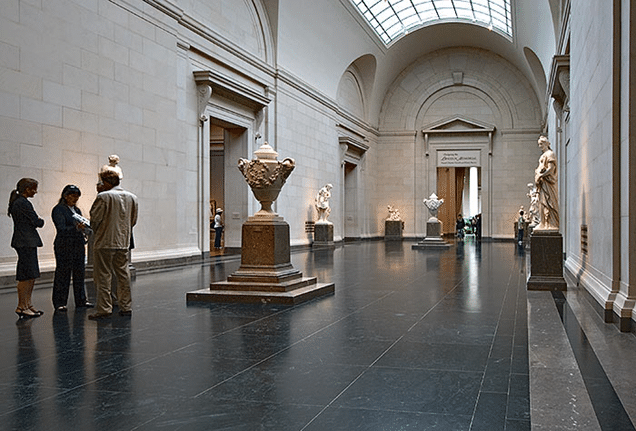
Pengunjung tahunan : 4,775,114 orang
2-2
Sebelum kematiannya pada tahun 1937, ahli kewangan Andrew W. Mellon berjanji untuk menggunakan koleksi seninya yang luas untuk mewujudkan galeri bagi penduduk Amerika Syarikat. Sejak muzium dibuka pada tahun 1941, koleksinya telah berkembang daripada lukisan oleh Old Masters untuk pameran seperti “Designing the Lincoln Memorial,”,2010 dilihat lebih daripada 2.9 juta pelawat-menjadikannya seni pameran yang paling popular pada tahun 2010 dan membantu National Gallery of Art menjamin tempat dalam 10 teratas.
No. 8 National Gallery, London
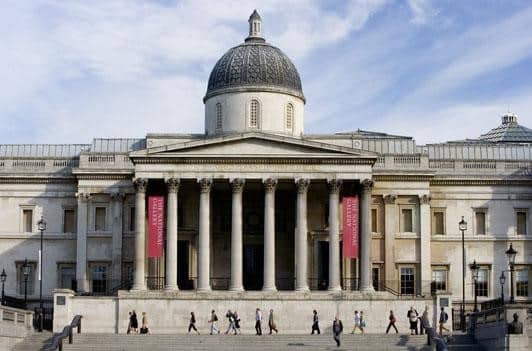
Pengunjung tahunan : 4,954,914 orang
3-13-2
Ditubuhkan pada tahun 1824 untuk memaparkan koleksi hanya 36 lukisan sahaja, tetapi pada hari ini National Gallery adalah tempat penyimpanan lebih daripada 2000 hasil karya. Terdapat karya-karya dari hampir setiap sekolah seni di Eropah. bangunan moden Sainsbury Wing mengandungi karya terawal galeri ini: lukisan Itali dari pelukis awal seperti Giotto dan Piero della Francesca.
No. 7 American Museum of Natural History, New York City
Pengunjung tahunan : 5,000,000 orang
4-1
Ditubuhkan pada tahun 1869, muzium ini telah mengalu-alukan kedatangan pengunjung yang datang untuk bersiar-siar melalui Koch Dinosaur Wing, Morgan Hall of Gems, dan Dewan Kehidupan Laut,Milstein di mana ia terkenal dengan replika besar seperti ikan paus biru yang digantung pada siling. Walaupun hanya memerlukan satu hari sahaja untuk menerokai di pameran tetap, namun terdapat juga pameran khas untuk diterokai, bersama-sama dengan Planetarium Hayden dan teater IMAX.
No. 6 Tate Modern, London
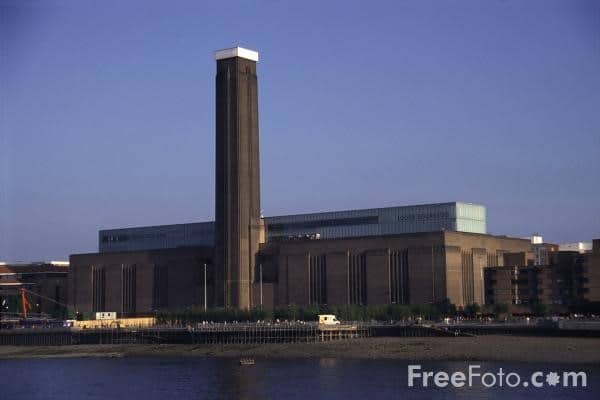
Pengunjung tahunan : 5,061,172 orang
5-1Sejak diperkenalkan pada tahun 2000, Tate Modern dengan tempoh yang singkat sahaja telah menjadi muzium seni moden yang paling popular di dunia, memasuki senarai antara muzium yang menarik pelawat 5,000,000 ke atas pada tahun lalu. Terletak di stesen kuasa yang dibina semula di seluruh Thames dari Katedral St. Paul, Tate mempamerkan hasil kerja dari Dalí, Magritte, dan Matisse serta pemasangan arca yang besar di dalam dewan turbin dramatik.

No. 5 Metropolitan Museum of Art, New York City
Pengunjung tahunan : 5,216,988 orang
6-2
Juga dikenali sebagai ‘The Met’, Muzium seni Metropolitan merupakan muzium terbesar di Hemisfera Barat. Dengan koleksi lebih daripada dua juta bahan dari seluruh dunia dan dari semua era yang luar biasa. Sebagai contoh: lukisan Eropah termasuklah hasil kerja dari Botticelli, Rembrandt, Vermeer, Degas, Rodin, dan lain-lain. Bagi koleksi Mesir purba pula ia mempamerkan makam Perneb dan Kuil Dendur.
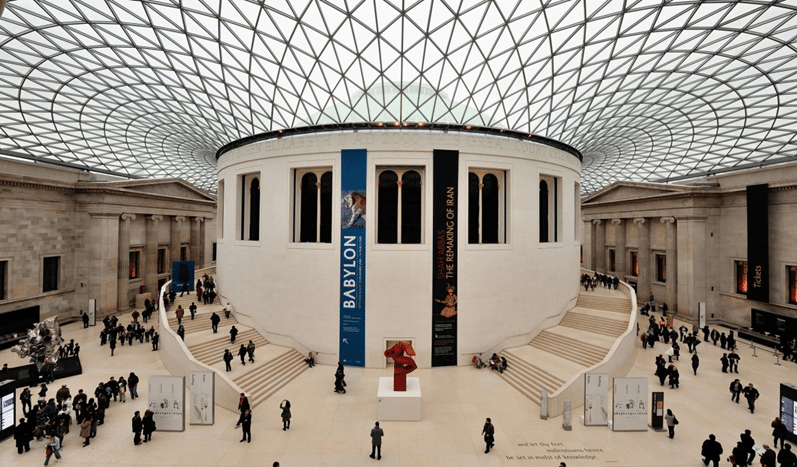
No. 4 British Museum, London
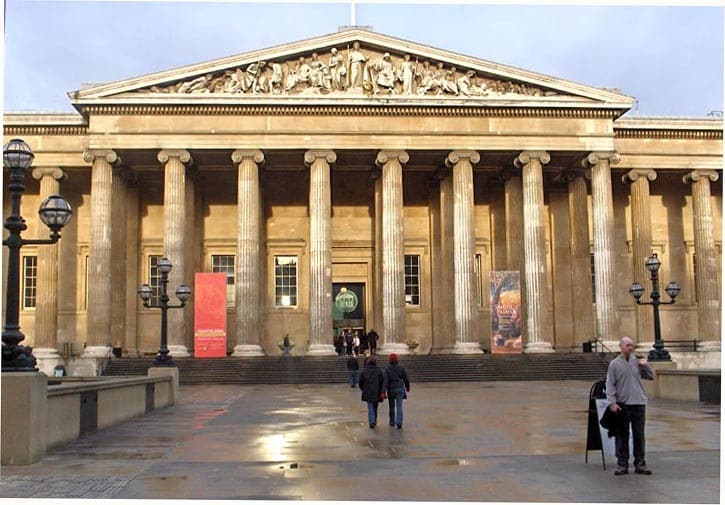
Pengunjung tahunan : 5,842,138 orang
7-17-2
Muzium yang selamanya diminati dengan kemasukan percuma, Muzium British menarik lebih 270,000 pelancong pada tahun lepas berbanding tahun 2009. Terdapat galeri sepanjang 2.5 batu dan 7 juta objek, pengunjung boleh merasai pengalaman menaiki pesawat yang hancur pada masa lalu menjadi tarikan pelancong yang luar biasa ke muzium ini seperti Batu Rosetta dan Elgin Marbles.

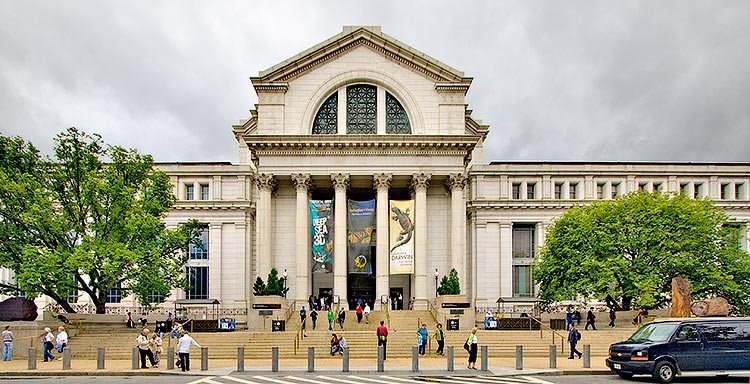
No. 3 Smithsonian National Museum of Natural History, Washington, D.C.
Pengunjung tahunan : 6,800,000 orang
8-1
Koleksi fosil dinosaur yang besar, Hope Diamond yang terkenal dan ada 126 juta barangan yang pelbagai menjadikan muzium sejarah semula jadi ini paling kerap dilawati di dunia. Dan ia terus membuat penambahbaikan. The David H Koch Hall of Human Origins dibuka pada tahun 2010 untuk meraikan ulang tahun ke-100 muzium ini di National Mall.

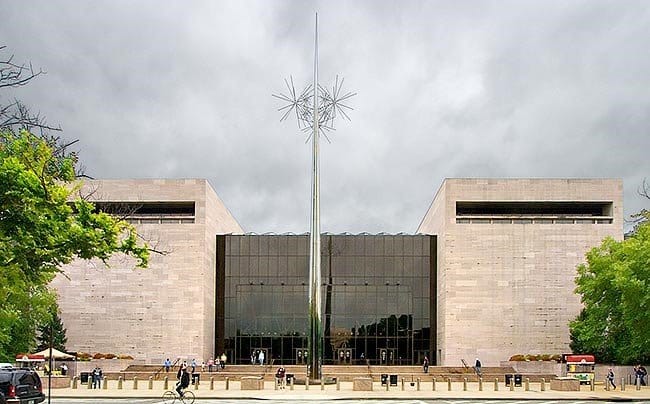
No. 2 Smithsonian National Air and Space Museum, Washington, D.C.
Pengunjung tahunan : 8,500,000 orang
9-1
Dibuka pada tahun 1976 di National Mall, menyimpan koleksi kapal terbang dan kapal angkasa bersejarah terbesar di dunia dan 50,000 artifak asal, dari flyer yang dicipta oleh Wright bersaudara 1903 hingga ke sampel batu lunar yang pengunjung dibenarkan sentuh. Kanak-kanak juga suka muzium ini kerana simulator penerbangannya, persembahan ruang 3D di Albert Einstein Planetarium dan pameran yang hebat mengenai ‘ Bagaimana Objek Terbang’.

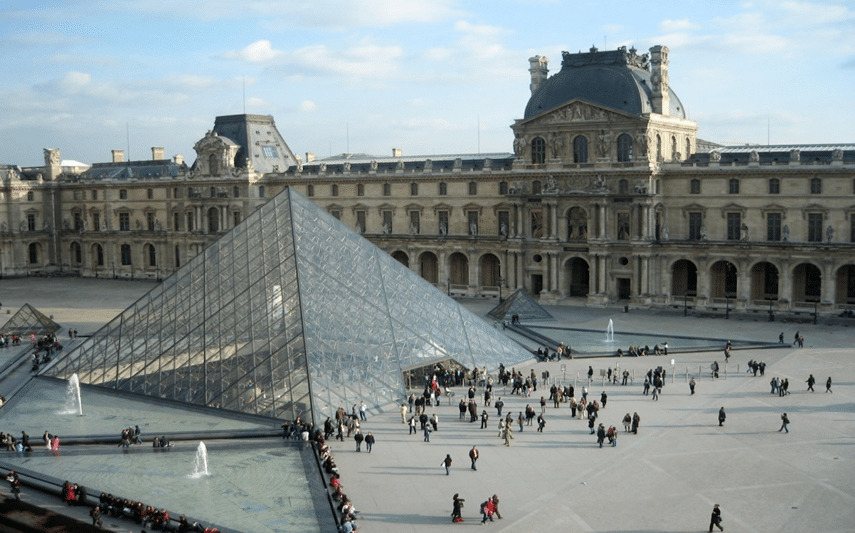
No. 1 Musée du Louvre, Paris
Pengunjung tahunan : 8,500,000 orang
10-1
Muzium yang paling kerap dilawati dan tidak ada tanda-tanda yang menunjukkan jumlah pengunjungnya akan menurun. Setiap tahun pengunjung ke Louvre tetap dalam likungan 8.5 juta setahun. Sementara ini, Louvre memang merupakan syurga bagi pencinta seni teridiri daripadakira-kira 35,000 karya, termasuk Venus de Milo dan Mona Lisa. Ia juga menjadi subjek kontroversi dimana tidak semua orang cukup puas untuk mengamati seni piramid IM Pei 69 kaki tinggi, yang ditambah sehingga pintu masuk hadapan pada 1989.


The Top 10 Communication Skills

The Importance of Communication Skills in the Workplace Communication skills are essential no matter what job you work in or your level o...